

In the modern industrial landscape, precision, efficiency, and reliability are not just buzzwords; they are the essential requirements for businesses aiming to stay competitive. Among the numerous technological advancements that have revolutionized industrial operations, the Programmable Logic Controller (PLC) control cabinet stands out as a cornerstone of modern automation. As a proud supplier of PLC control cabinets, I've witnessed firsthand how these powerful systems transform industrial environments, offering a multitude of advantages to businesses across various sectors.
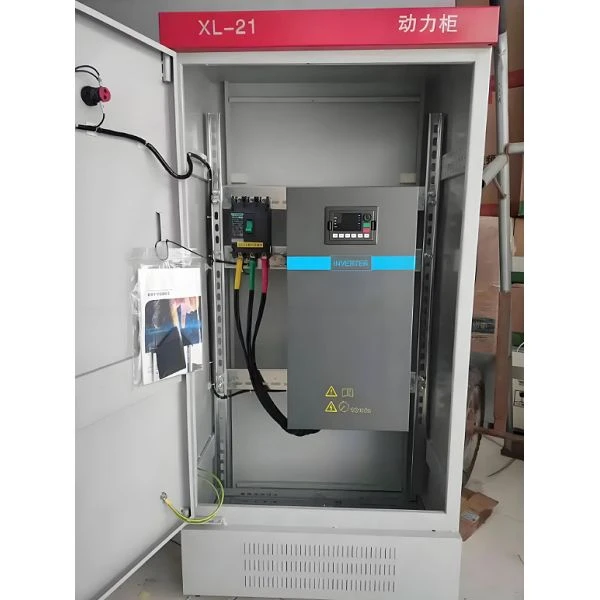

Enhanced Automation and Precision
One of the most significant benefits of using a PLC control cabinet is its ability to automate complex industrial processes. PLCs are designed to execute a series of pre - programmed instructions with remarkable precision. This automation eliminates the margin of error associated with manual operations. For instance, in a manufacturing plant, a PLC control cabinet can precisely control the speed, temperature, and pressure of production equipment. This level of accuracy ensures consistent product quality, reducing the likelihood of defective products and minimizing waste.
Automation also allows for continuous operation. Unlike human operators who need breaks, a PLC - controlled system can run 24/7 without fatigue. This non - stop operation significantly boosts productivity, enabling businesses to meet high - volume production demands. For example, in a food processing facility, a PLC control cabinet can manage the entire packaging process, from filling to sealing, ensuring that products are packaged efficiently and accurately around the clock.
Flexibility and Adaptability
PLC control cabinets offer unparalleled flexibility. The programming of a PLC can be easily modified to adapt to changing production requirements. This means that businesses do not have to invest in new equipment every time they need to change their production process. For example, if a company decides to introduce a new product line, the PLC can be reprogrammed to control the new manufacturing steps. This adaptability saves both time and money, as it reduces the need for costly equipment upgrades.
Moreover, PLCs can interface with a wide range of industrial devices. They can communicate with sensors, actuators, motors, and other control systems, creating a unified and integrated automation network. For instance, in a chemical processing plant, a PLC control cabinet can connect with temperature sensors, flow meters, and valves to regulate the chemical reactions precisely. This seamless integration of different devices enhances the overall functionality of the industrial system.
Improved Safety
Safety is a top priority in any industrial setting. PLC control cabinets play a crucial role in enhancing safety. They can be programmed to monitor various safety parameters and take immediate action in case of an emergency. For example, in a power generation plant, a PLC can detect abnormal temperature or pressure levels in the equipment and automatically shut down the system to prevent a potential explosion.
PLCs also provide safety interlocks. These are mechanisms that prevent certain actions from occurring unless specific conditions are met. For instance, in a conveyor belt system, a PLC can ensure that the belt does not start until all the safety guards are in place. This reduces the risk of accidents and injuries to workers, creating a safer working environment.
Remote Monitoring and Maintenance
In today's digital age, the ability to remotely monitor and maintain industrial systems is a game - changer. PLC control cabinets support remote access, allowing operators and maintenance personnel to monitor the system's performance from anywhere in the world. Through a secure network connection, they can check the status of the PLC, view real - time data, and even troubleshoot problems without being physically present at the site.
Remote maintenance is also made possible with PLC control cabinets. If a fault is detected, maintenance teams can remotely diagnose the problem and, in many cases, perform the necessary repairs. This reduces downtime, as the system can be quickly restored to normal operation. For example, in a remote oil rig, a PLC control cabinet can be monitored and maintained from the on - shore control center, minimizing the need for expensive and time - consuming on - site visits.
Cost - Effectiveness
Although the initial investment in a PLC control cabinet may seem significant, it offers substantial long - term cost savings. The increased productivity and reduced waste resulting from automation lead to higher output with lower production costs. Additionally, the flexibility of PLCs means that businesses can adapt to market changes without incurring huge capital expenditures on new equipment.
The lower maintenance requirements of PLC control cabinets also contribute to cost savings. PLCs are highly reliable and have a long service life. They are less prone to mechanical failures compared to traditional control systems. Moreover, the ability to remotely monitor and maintain the system reduces the need for on - site maintenance personnel, further cutting down on labor costs.
Comparison with Other Control Cabinets
When comparing PLC control cabinets with other types of control cabinets such as Motor Control Cabinet (MCC) and Electrical Control Cabinet, the advantages of PLCs become even more evident. While MCCs are mainly used for motor control and electrical control cabinets house various electrical components, PLC control cabinets offer a higher level of automation and programmability.
MCCs are typically designed for simple motor on/off control and basic protection functions. In contrast, PLCs can perform complex logic operations, making them suitable for controlling multiple motors and coordinating different processes in a more sophisticated way. Electrical control cabinets, on the other hand, may lack the flexibility and intelligence of PLC control cabinets. They are often used for static electrical distribution and basic control, while PLCs can adapt to dynamic production requirements.
Integration with Industry 4.0
The emergence of Industry 4.0 has brought about a new era of digital transformation in the manufacturing sector. PLC control cabinets are at the forefront of this revolution. They can be integrated with the Internet of Things (IoT) devices, cloud computing, and big data analytics to create a smart factory environment.
With IoT integration, PLC - controlled systems can collect and transmit data about their performance, status, and operating conditions. This data can then be analyzed in the cloud to identify patterns, predict faults, and optimize production processes. For example, by analyzing the data from temperature sensors connected to a PLC, manufacturers can adjust the cooling system in real - time to improve energy efficiency.
Why Choose Our PLC Control Cabinets?
As a supplier of PLC Control Cabinet, we pride ourselves on offering high - quality, reliable, and innovative products. Our PLC control cabinets are designed to meet the diverse needs of different industries. We use the latest technology and highest - quality components to ensure that our products deliver superior performance and long - term reliability.
Our team of experienced engineers and technicians is dedicated to providing excellent customer service. We offer customized solutions, working closely with our clients to understand their specific requirements and design the most suitable PLC control cabinet for their applications. Whether you are a small - scale manufacturer or a large industrial enterprise, we have the expertise and resources to support your automation needs.
If you are interested in learning more about how our PLC control cabinets can benefit your business, or if you are ready to discuss your specific requirements, we encourage you to contact us. We are eager to help you optimize your industrial processes, improve productivity, and achieve your business goals.
References
- "Automation Engineering Handbook", John Doe, 20XX.
- "Industrial Control Systems: Principles and Applications", Jane Smith, 20XX.
- Journal of Industrial Automation, various issues.